MIG Welding
Hosts ToolCraft & Dave Littleton
May 20th 2006
|
Members in Attendance |
||
| Neil
Butterfield
Alan McDonald Owen Jeffers
|
David
Littleton
Tom Davis Tony Cassinat |
Chuck
LaRue
John Lea Neil Peters Bob Sanders |
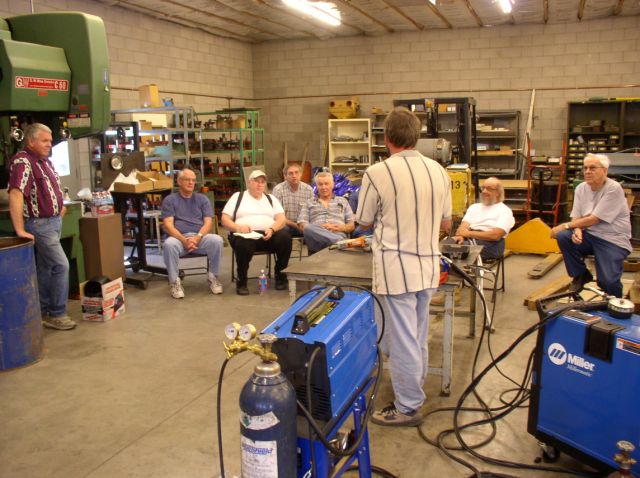
Presenter David Littleton brought his welding equipment and set up demonstrations and practice coupons for us to try.
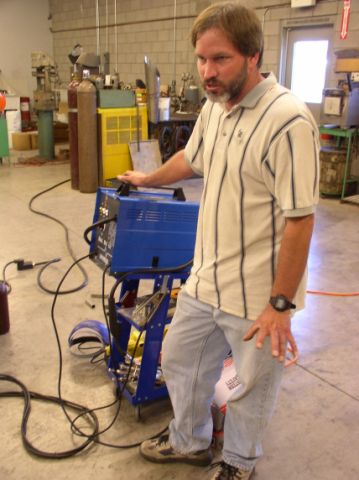
The focus of the demo was the Harbor Freight Dual MIG 131 welder model number 6098. This is a 110V machine with 80 amp max capability at 20% duty cycle. This machine is rated capable of welding 3/16" steel at the max setting of 85 amps. David has used this machine with great success as a home hobby machine. This machine is frequently on sale at Harbor Freight for approx $190.
To complete the setup as demonstrated, David bought a gas regulator ($33), gas bottle, welding cart, and replaced the ground clamp with a larger capacity one. David recommends the welding cart that includes a place to mount and secure the gas bottle. A gas flow regulator with a flow meter is a better solution to the gas regulation need. These regulators cost about $70. They meter the flow more accurately.
David pointed out there are other brands of MIG welders on the market that have well known brand names and are excellent quality machines. Their higher cost are a significant consideration for the home hobby welder.
The demonstration of the gas shielded welding used a mixture of 75% Argon and 25% CO2. For welding stainless David recommends 100% Argon or a Tri-Mix gas. David showed several sizes of gas bottles. The smaller ones seem handy at first, but they do not hold enough gas. The refill charge on the smaller tanks and the trouble of transport back & fourth dictate getting a minimum 60 cu ft tank.
Auxiliary equipment needed
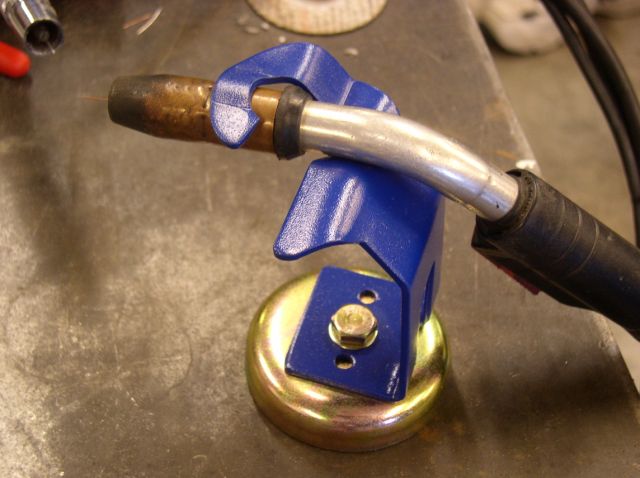
Welder set up and prep
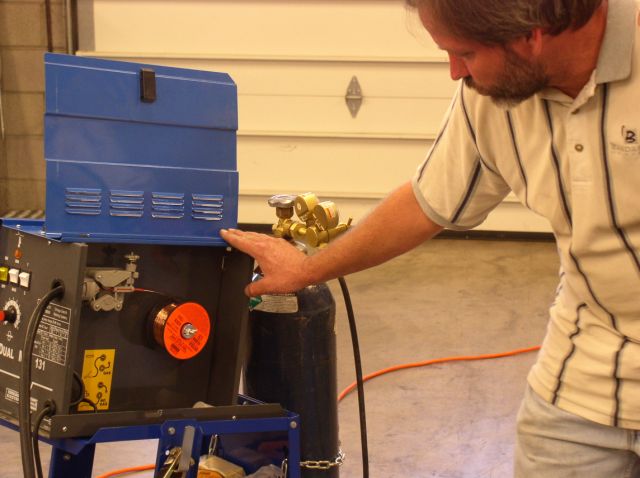
The gas flow meter should be set to deliver 12 to 15 cubic feet per hour (CFH). You may need higher flow if outside in breezy conditions or an atmosphere where the gas shield may be disturbed by air currents around the work site.
When loading the wire spool in the welder, be careful to hold the wire on the spool to keep it from uncoiling. Until the end of the wire is retained in the wire feed wheels, the wire on the spool tends to uncoil from spring action.
The wire feed mechanism in the machine has grooves suited for the different sizes of wire. Select the appropriate sized groove for the wire to be used.
The tension adjustment on the wire feed mechanism should be adjusted per the equipment directions.
The wire should be set ½" past the gas shield to start welding. When welding, adjust the wire feed rate to keep this wire spacing. The welder wire feed rate is originally set to pre-set speeds for the welding amperage selected. A fine adjust feature is included to tweak the feed rate as needed for the particular welding conditions.
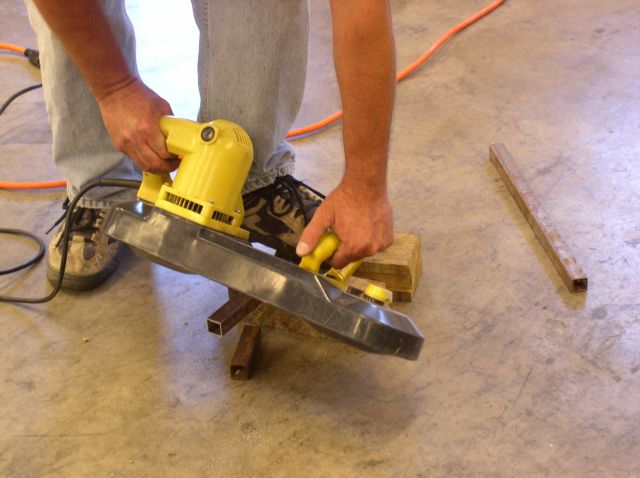
David demonstrated grinding a bevel on the edges of 5/16" thick material to make a butt weld with the machine set at max amps. This allows making welds even at greater thickness material than the machine rating.
David encourages a welding speed on steel of 1" travel in 5 seconds. He normally does not use the circular puddling motion unless welding extra heavy material.
MIG welding is a "coldstart" weld. The arc strike must raise the material to melting temperature. Preheating the material can make the welding start easier. If welding cast iron, you must do preheat.
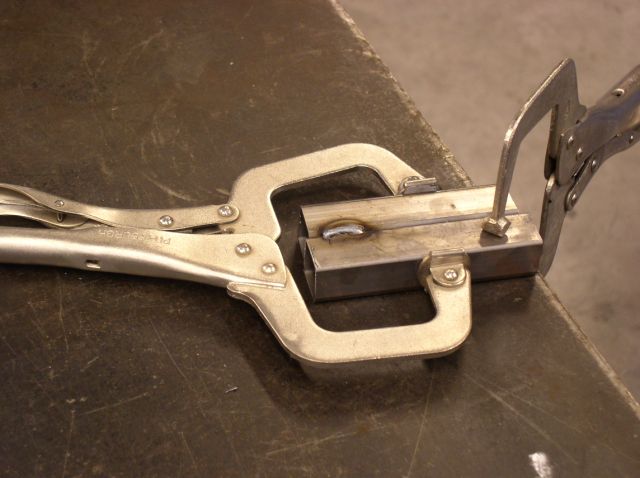
David also demonstrated flux core wire welding without cover gas. The flux core generates the cover gas during the weld. This form of weld generates more splatter similar to conventional arc welding. The splatter is easier to brush away after the weld.

When changing from solid wire to flux wire welding with the Harbor Freight welder, the polarity must be reversed. A chart inside the machine by the wire spool holder is easy to follow to make this change.
David also demonstrated welding aluminum with his Miller 210 MIG welder. Again he stressed cleanliness of the material at the start of the welding process.
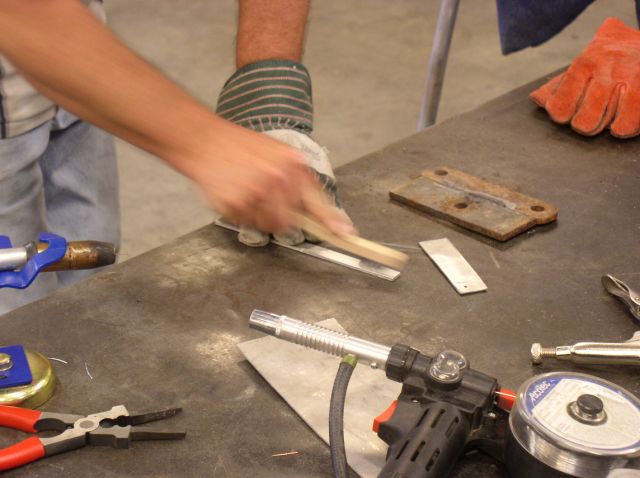
Several club members tried the flux core welding. We found the process sounds simple, and looks easy. We soon learned welding requires practice to gain proficiency.
Updated 5/21/2006